
Wednesday, May 31, 2017

Monday, May 29, 2017
Book Review: On Being Stuck: Tapping Into the Creative Power of Writer's Block by Laraine Herring
 ISBN: 1611802903
Published: May 17th, 2016
Publisher: Shambhala
Received: Goodreads First Reads
Read from April 15th to May 7th, 2017
Synopsis from Goodreads:
What if writer's block became your most precious teacher? An empowering new process for writers who struggle with the seemingly insurmountable middle of a project, from the author of Writing Begins with the Breath.
Writer's block is not a mysterious force that has aligned with your writing to stop you in your tracks. Writer's block occurs when hope meets fear—when our expectations for a project or ourselves as writers run head first into the fear(s) that are uniquely tied to that hope. Writer's block is not external. It is not part of a vast conspiracy. It is a signal from deep within to pay attention to the writing and to pay attention to what the writing is asking of us as writers. Using deep inquiry, writing, body and breath exercises, and a range of interdisciplinary approaches, On Being Stuck helps writers uncover the gifts hidden within their creative blocks and deepen their relationship not only to their work but to themselves.
Review:
To be honest, this book wasn't for me. While I like to read books on writing, this one was focused around how to motivate yourself to write. You don't get any practical advice beyond motivating words and journal/meditation topics about writer's block.
The author is a proponent of mindfulness and meditation. Each chapter is very short (a few pages at most) and each ends with a task meant to motivate you to write. These tasks are prompts that you can write about in your journal (that the book encourages you to keep) or meditations that you can do. While I think journaling and meditating can both be helpful, I didn't get anything out of the activities in the book.
There are more than thirty chapters, and many of them felt repetitive. They were essentially the same thing said with different words, so the book felt even less worth it as I continued to read.
I would say this book is worth checking out if you want to start keeping a journal and/or meditating on writing (and need help getting over a mental barrier to write) and you need prompts. Other than that, you're not going to get much from this book.
I received this book from Goodreads First Reads in exchange for a review. This did not affect my opinion.
Wednesday, May 24, 2017
Thoughts On Rating Books You Don't Finish
Almost every book blogger I follow has written about their views on reviewing books that they didn't actually finish (or DNFs), but I've never written abuot my own opinion. After seeing a couple more of these posts recently, I decided that maybe I should do so.
There are reviews here on my blog of books that I haven't finished, though recently I have done this less often. I haven't stopped doing so because I'm against the idea of it. I've just decided I don't want to spend my time writing reviews for those books. The entire thing would often be negative, and unless there's a good reason for it, I'm just not in the mood to go on about why I hated the book without having anything good to say about it. Still, I make the decision over whether I'll review a book on a case-by-case basis.
That being said, I almost always give any books I abandon a star rating on Goodreads, and I support people doing so. While I get why some people might consider it unfair, I don't see it that way myself. If I disliked a book so much that I couldn't finish it, then I think that's a valid experience that should be expressed through a rating or review.
Sure, there are other people who would undoubtedly love the book even if I couldn't finish it, but the same is true if I read an entire book and still gave it a negative rating.
Say a book has ten reviews that are average or positive, which makes that book's overall star rating rather good, but what you don't know is that another ten people disliked the book so much that they didn't finish it and didn't leave a review at all. I think that, in a case like that (albeit an unlikely one) that book's star rating is inaccurate, and it would be helpful if people could see that there were just as many people who disliked the book so much that they abandoned it as there were people who enjoyed it. I don't think that's unfair information to add into a rating. Ratings are, after all, to help people find books worth reading, and adding DNFs into the rating helps that.
If there were another option of Goodreads, Amazon, etc. where I could publicly mark the book as abandoned instead of giving it a rating, then I'd happily do that instead. (I know you can make your own DNF list on Goodreads, but I mean something that people would see while looking at the book information.) Maybe there would be information available on the book's page such as "this many people abandoned this book". I think that would be helpful, and I don't necessarily think it would need to be displayed as prominently as the average rating if it was there for people who wanted to see that information.
As that option doesn't currently exist, I'm going to keep rating books I abandon because I think that's information that's helpful for others and is as valid of a rating as a rating from someone who read the entire thing and gave it a negative review.
The other issue surrounding abandoned books is whether or not you add them to your "read" shelf on Goodreads (therefore letting them contribute to your numbers for the yearly reading challenge). I typically mark abandoned books as "read" if I finished more than half of the book. I think that that's fair enough and don't feel bad doing so, especially since, with the varying lengths of books, that can sometimes mean I read more of that book than another book that I actually finished.
There are reviews here on my blog of books that I haven't finished, though recently I have done this less often. I haven't stopped doing so because I'm against the idea of it. I've just decided I don't want to spend my time writing reviews for those books. The entire thing would often be negative, and unless there's a good reason for it, I'm just not in the mood to go on about why I hated the book without having anything good to say about it. Still, I make the decision over whether I'll review a book on a case-by-case basis.
That being said, I almost always give any books I abandon a star rating on Goodreads, and I support people doing so. While I get why some people might consider it unfair, I don't see it that way myself. If I disliked a book so much that I couldn't finish it, then I think that's a valid experience that should be expressed through a rating or review.
Sure, there are other people who would undoubtedly love the book even if I couldn't finish it, but the same is true if I read an entire book and still gave it a negative rating.
Say a book has ten reviews that are average or positive, which makes that book's overall star rating rather good, but what you don't know is that another ten people disliked the book so much that they didn't finish it and didn't leave a review at all. I think that, in a case like that (albeit an unlikely one) that book's star rating is inaccurate, and it would be helpful if people could see that there were just as many people who disliked the book so much that they abandoned it as there were people who enjoyed it. I don't think that's unfair information to add into a rating. Ratings are, after all, to help people find books worth reading, and adding DNFs into the rating helps that.
If there were another option of Goodreads, Amazon, etc. where I could publicly mark the book as abandoned instead of giving it a rating, then I'd happily do that instead. (I know you can make your own DNF list on Goodreads, but I mean something that people would see while looking at the book information.) Maybe there would be information available on the book's page such as "this many people abandoned this book". I think that would be helpful, and I don't necessarily think it would need to be displayed as prominently as the average rating if it was there for people who wanted to see that information.
As that option doesn't currently exist, I'm going to keep rating books I abandon because I think that's information that's helpful for others and is as valid of a rating as a rating from someone who read the entire thing and gave it a negative review.
The other issue surrounding abandoned books is whether or not you add them to your "read" shelf on Goodreads (therefore letting them contribute to your numbers for the yearly reading challenge). I typically mark abandoned books as "read" if I finished more than half of the book. I think that that's fair enough and don't feel bad doing so, especially since, with the varying lengths of books, that can sometimes mean I read more of that book than another book that I actually finished.
Monday, May 22, 2017
Naruto Shippuden Review: Episodes 386-390
To be honest, I was getting a bit bored by the Obito-focused episodes by the time I reached their end. It felt as if I was watching the same things happen over and over.
Reaching the Gaara-focused episode was a nice change of pace. It had been so many episodes since Gaara had done much, and each time an episode dives into Gaara's past, I tend to enjoy it. Episode 387 was no exception.
I was waiting to see if we would see Gaara and Shukaku come face-to-face, so I was paying close attention during that scene. I liked the dynamics of it. I liked seeing Shukaku agree to help Gaara despite being the only tailed beast not to meet Naurto, even if it was due to jealousy towards Kurama.
Episodes 389 and 390 were two of my favorites in a very long time. Of had been so many episodes since Hinata was shown much, and it's the most Hanabi has ever been in the show. As someone who really loves Hinata, I was excited to watch those episodes, and I don't feel disappointed in the slightest. I loved understanding Hanabi more and getting to see her perspective of Hinata and how Hinata has inspired her.
I actually wish that we could stay with Hanabi a bit longer.
Reaching the Gaara-focused episode was a nice change of pace. It had been so many episodes since Gaara had done much, and each time an episode dives into Gaara's past, I tend to enjoy it. Episode 387 was no exception.
I was waiting to see if we would see Gaara and Shukaku come face-to-face, so I was paying close attention during that scene. I liked the dynamics of it. I liked seeing Shukaku agree to help Gaara despite being the only tailed beast not to meet Naurto, even if it was due to jealousy towards Kurama.
Episodes 389 and 390 were two of my favorites in a very long time. Of had been so many episodes since Hinata was shown much, and it's the most Hanabi has ever been in the show. As someone who really loves Hinata, I was excited to watch those episodes, and I don't feel disappointed in the slightest. I loved understanding Hanabi more and getting to see her perspective of Hinata and how Hinata has inspired her.
I actually wish that we could stay with Hanabi a bit longer.
Sunday, May 21, 2017
Book Review: Harry Potter and History, Edited by Nancy Reagin
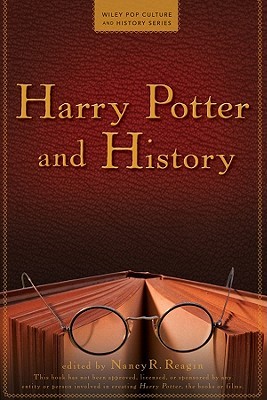 ISBN: 0470574720
Published: May 1st, 2011
Publisher: Wiley
Received: purchased
Read from May 1st to 6th, 2017
Synopsis from Goodreads:
A guide to the history behind the world of Harry Potter just in time for the last Harry Potter movie, Harry Potter and the Deathly Hallows (Part II)
Harry Potter lives in a world that is both magical and historical. Hogwarts pupils ride an old-fashioned steam train to school, notes are taken on parchment with quill pens, and Muggle legends come to life in the form of werewolves, witches, and magical spells. This book is the first to explore the real history in which Harry's world is rooted.
Did you know that bezoars and mandrakes were fashionable luxury items for centuries? Find out how Europeans first developed the potions, spells, and charms taught at Hogwarts, from Avada Kedavra to love charms. Learn how the European prosecution of witches led to the Statute of Secrecy, meet the real Nicholas Flamel, see how the Malfoys stack up against Muggle English aristocrats, and compare the history of the wizarding world to real-life history.
Gives you the historical backdrop to Harry Potter's world
Covers topics ranging from how real British boarding schools compare to Hogwarts to how parchment, quills, and scrolls used in the wizarding world were made
Includes a timeline comparing the history of the wizarding world to Muggle "real" history
Filled with fascinating facts and background, Harry Potter and History is an essential companion for every Harry Potter fan.
Review:
Harry Potter and History is a collection of essays about Harry Potter and history. Pretty straight-forward. It was the first Harry Potter-related non-fiction book that I had read in a long time, and I was excited for it. I love almost anything that discusses Harry Potter, and I also love history. I had to give this book a shot.
And despite having some flaws, I had an enjoyable time reading Harry Potter and History. It was an interesting decision to write each essay as if the Harry Potter universe were real. Each writer uses "Muggle" as if it were a real term used to distinguish us normal people from the wizards and witches of Harry's world. Historical events from the wizarding world were also mentioned alongside real world events as if both had happened. I could see the potential for that getting confusing in a book like this, but it tends to be obvious what's real and what isn't. No one's going to think the formation of Quidditch teams is an actual historical event.
There were several points where I noticed that "facts" from the Harry Potter books weren't exactly accurate, and that got a little frustrating. You'd think that information from the books would be checked in a book entirely about Harry Potter. As far as the historical facts go, there was nothing I noticed as being wrong, but I'm not a historian (and didn't fact check the majority of the book). There are sources listed for each essay though.
I also can't avoid mentioning (because I'm sure there are people who would want to know this before picking up the book) that one essay in the book tries to make the point that werewolves in the Harry Potter series are a metaphor for pedophiles in the real world, which is not the first metaphor I would choose when there are others that (I think) work better. While the writer does a good job of explaining what makes them see it, I don't agree with that interpretation. I also don't remember how that part of the book was supposed to be connected to "history".
Still, much of the book was a fun read. I liked getting to read about stories of the past that I'd never heard before, including details about past magical practices. I particularly enjoyed reading about how perceptions of witchcraft changed over time and what signs of witchcraft were accepted at different times. (Apparently, it was once thought that witches being able to fly was ridiculous. If they thought they had, they were believed to be hallucinating, but this changed later when the idea of witches flying around on brooms at night became common. I find that interesting as it might seem "backwards" to us that they'd dismiss flying as impossible only to come to believe in it later.)
There are people out there who would enjoy this book, though I wouldn't go into it with incredibly high expectations. It's entertaining to read if you have an interest in Harry Potter and history. If you're looking for something like that, it might be worth checking out.
Subscribe to:
Posts (Atom)