Saturday, January 7, 2023

Book Review: Why I'm No Longer Talking to White People About Race by Reni Eddo-Lodge

Published: June 1, 2017
Publisher: Bloomsbury Circus
Received: purchased
Read from November 28, 2022 to January 7, 2023

Synopsis from Goodreads:

In 2014, award-winning journalist Reni Eddo-Lodge wrote about her frustration with the way that discussions of race and racism in Britain were being led by those who weren't affected by it. She posted a piece on her blog, entitled: 'Why I'm No Longer Talking to White People About Race' that led to this book.

Exploring issues from eradicated black history to the political purpose of white dominance, whitewashed feminism to the inextricable link between class and race, Reni Eddo-Lodge offers a timely and essential new framework for how to see, acknowledge and counter racism. It is a searing, illuminating, absolutely necessary exploration of what it is to be a person of colour in Britain today.

Review:

Why I'm No Longer Talking to White People About Race is one of those books that I'd been hearing about for years. I even remember when Eddo-Lodge's initial blog post when viral and the discussion that surrounded that. So I was excited to actually read the book.

One thing I appreciated about the book is that it was written from a British perspective. Most of the books I've read about race were written by an American. There are a few exceptions to that, such as Me and White Supremacy by Layla F. Saad. (Saad was born in the UK and now lives in the Middle East.) But it was really great to get a perspective that was very focused on the UK. While I did know some of the historical perspective that was talked about, I definitely knew far less than I do about racism in American history.

Eddo-Lodge mentions in the book that many British people see racism as an American problem, not a British one, so I feel like this book plays an especially important role in breaking down that misconception.

It's also written in a style that's very easy to read. While it's dealing with difficult topics, it's very accessible and easy to understand, even if it may include things that certain people don't want to hear.

This is a book that I would highly recommend to anyone. I think it's especially great for people who want a British perspective on racism.

Friday, January 6, 2023

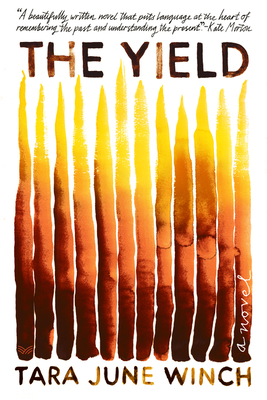
Book Review: The Yield by Tara June Winch

Published: July 2, 2019
Publisher: HarperVia
Received: purchased
Read from August 13, 2022 to January 4, 2023
Synopsis from Goodreads:

Knowing that he will soon die, Albert ‘Poppy’ Gondiwindi takes pen to paper. His life has been spent on the banks of the Murrumby River at Prosperous House, on Massacre Plains. Albert is determined to pass on the language of his people and everything that was ever remembered. He finds the words on the wind.

August Gondiwindi has been living on the other side of the world for ten years when she learns of her grandfather’s death. She returns home for his burial, wracked with grief and burdened with all she tried to leave behind. Her homecoming is bittersweet as she confronts the love of her kin and news that Prosperous is to be repossessed by a mining company. Determined to make amends she endeavours to save their land – a quest that leads her to the voice of her grandfather and into the past, the stories of her people, the secrets of the river.

Profoundly moving and exquisitely written, Tara June Winch’s The Yield is the story of a people and a culture dispossessed. But it is as much a celebration of what was and what endures, and a powerful reclaiming of Indigenous language, storytelling and identity.

Review:

The Yield was one of the picks for the Branching Out Book Club, but I didn't manage to finish the book until long after the reading period had ended. The story is about August, who moved to France to escape her hometown in Australia. When she was a child, August's sister went missing, and memories of her sister haunt August when she returns to her hometown for her grandfather's funeral. She also learns that a mine is going to be opened, which means that they'll tear down her childhood home.

My favorite part of the story was the setting. I've read very few books set in Australia. Actually, it's possible that I've never read a book set in Australia. August grew up in a house that was formerly a mission set up by a Lutheran priest, and there's a lot of discussion about the colonization of Australia, particularly through a letter written by said priest, which is interspersed throughout the story. I found the letter more interesting that August's story itself.

For me, August's story felt slow, and I wasn't very motivated to pick up the book, which is part of what took me so long to finish it. The story is also quite dark because of the subject matter, so it was far from a light and cheerful read.

Still, I appreciated getting to read a story from a different perspective than I ever had before.

Friday, December 30, 2022

Book Review: Rogue Protocol by Martha Wells (Murderbot Diaries #3)

Publisher: Tor.com
Published: August 7, 2018
Received: purchased
Read from November 14 to December 27, 2022
Synopsis from Goodreads:

SciFi’s favorite antisocial A.I. is again on a mission. The case against the too-big-to-fail GrayCris Corporation is floundering, and more importantly, authorities are beginning to ask more questions about where Dr. Mensah’s SecUnit is.

And Murderbot would rather those questions went away. For good.

Review:

Rogue Protocol is the third novella in the Murderbot Diaries series. In this one, Murderbot is investigating GrayCris and winds up helping a group of humans (and a bot) who are also investigating a terraforming facility that was run by GrayCris.

Like the last book, this one was filled with completely new characters except for Murderbot itself. I do enjoy getting a diverse look of the sorts of people that live in this universe, but I have a hard time getting invested in many of the characters because I know they'll be gone come the next book. Though part of why I don't feel closer to them might also be the way in which the story is told. Murderbot is keeping its distance from the humans in this book too. Murderbot is always doing that, but in this one, it felt like Murderbot interacted with the human characters even less than in the last book. That's just my perception though and isn't necessarily true.

Similar to how Murderbot formed a close-ish relationship with ART in the last book, it becomes closer to Miki (a bot) than any of the humans in this book, and I also found myself being drawn to Miki more than any of the human characters.

Miki challenges a lot of Murderbot's beliefs about relationships between humans and bots as Miki thinks of the humans it travels with as friends while Murderbot thinks of them as owners. Murderbot is pretty judgmental of Miki at the start and views Miki has naïve for viewing humans as friends, but Murderbot's own views are challenged by the end of the story.

I imagine this is going to continue to shape Murderbot's view of the world, including its own relationships with humans that it has or will encounter. I'm excited for that. Murderbot seeing Miki's relationship with its friends was my favorite part of this book.

Rogue Protocol was a fun book, and I enjoyed going on another adventure with Murderbot. At the same time, I'm really missing the characters from the first book and ART from the second book.

It looks like Mensah will make another appearance in the next book, and I'm really looking forward to it.

Saturday, December 24, 2022

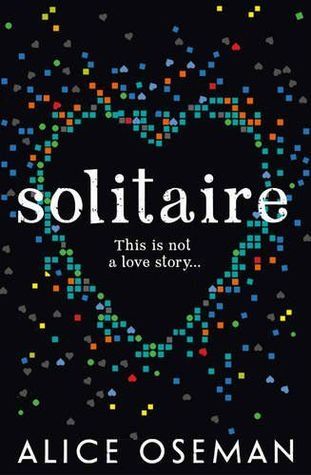
Book Review: Solitaire by Alice Oseman

Publisher: Harper Collins Children's Books UK
Published: July 31, 2014
Received: purchased
Read from June 13 to December 20, 2022
Synopsis from Goodreads: 

In case you’re wondering, this is not a love story.

My name is Tori Spring. I like to sleep and I like to blog. Last year – before all that stuff with Charlie and before I had to face the harsh realities of A-Levels and university applications and the fact that one day I really will have to start talking to people – I had friends. Things were very different, I guess, but that’s all over now.

Now there’s Solitaire. And Michael Holden.

I don’t know what Solitaire are trying to do, and I don’t care about Michael Holden.

I really don’t.

This incredible debut novel by outstanding young author Alice Oseman is perfect for fans of John Green, Rainbow Rowell and all unflinchingly honest writers.

Review:

Since Heartstopper was released on Netflix earlier this year, I've watched it too many times to keep count. I've fallen absolutely in love, so of course I wanted to read the comics and Alice Oseman's other books. The comics are available for free online, so I read the whole thing while waiting for the books to arrive in the mail. (When the physical copies arrived, I immediately started reading Solitaire, so I actually haven't gotten a chance to read the physical copies of the comics yet either.)

While the Heartstopper TV show is based on the comics, not Solitaire, Solitaire is set in the same universe. All of Oseman's books are, but from what I know, Solitaire is the book most closely tied to Heartstopper. It follows Tori, the older sister of Charlie in Heartstopper. It also takes place a year after Heartstopper volume/season 1 even though the book itself came out earlier. It was actually the first book that Alice Oseman published.

That fact was evident while reading. The tone of the book does feel like it was written by someone younger. I believe Oseman published the book while they were in university. It does show but not necessarily in a bad way. The teen voice of the book felt very authentic. I could totally believe that Tori would view the world the way she did even when I, as an adult, felt frustrated with her at various points throughout the story.

Despite sometimes feeling annoyed with Tori, I do think she was well written. All of the characters were. I could easily imagine them fitting in with my classmates back in high school. They felt like real teenagers. To the point that some of them were downright infuriating, like Becky. I'm still trying to make myself feel sympathy for Becky purely because I knew what it's like to be a  teenager, but I have to admit that it's hard.

Tori and Becky's friendship was one of many aspects of the book that felt incredibly realistic though, and I appreciated the way it was written.

The standout character was absolutely Michael Holden. I'd heard about him before reading the book from other Heartstopper fans, and there are little glimpses of him in later installments of Heartstopper. I figured I would like him, and I was right. In some ways, he felt like a manic pixie dream girl except he was a guy, and I feel like this might have been done on purpose, especially since there's a reference to manic pixie dream girls in the book.

I just loved the way he was portrayed. I would absolutely read an entire book about Michael. Even though we learn he's not always as bright and cheerful as he seems, he did feel like a bit of lightheartedness that was otherwise lacking throughout the beginning and middle of the book.

One thing I heard about Solitaire before I read it was that it was darker than Heartstopper, after reading the book and also all of Heartstopper that's been released, I get that view but also didn't entirely feel the same way. There are a lot of mental health issues dealt with in Solitaire. It absolutely does get dark in places, but later volumes of Heartstopper (beyond what's been adapted on the TV show) also deal with similar issues. While I do think that Solitaire leaned into that darkness a bit more, the book honestly wasn't as dark as I suspected after hearing others talk about it. While Heartstopper does have a light tone overall, it also deals with some dark stuff in a serious way, and I was expecting Solitaire to be darker than it is from the discourse I'd heard about it.

While I do think Heartstopper is a story that I'll revisit more because it is more light-hearted at the end of the day, I still enjoyed Solitaire, and I'm looking forward to reading Alice Oseman's other books. Though they take place in the same general universe, they're not as closely tied to Heartstopper and Solitaire from what I've heard. Still, I'm looking forward to seeing more of that world, and I also look forward to how Oseman's writing style has grown over the years since Solitaire was published.

Tuesday, November 29, 2022

Book Review: Tears We Cannot Stop by Michael Eric Dyson

Published: January 17, 2017
Publisher: St. Martin's Press
Received: purchased
Read from September 14 to November 20, 2022

Synopsis from Goodreads:

Short, emotional, literary, powerful―Tears We Cannot Stop is the book that all Americans who care about the current and long-burning crisis in race relations will want to read.

As the country grapples with racist division at a level not seen since the 1960s, one man's voice soars above the rest with conviction and compassion. In his 2016 New York Times op-ed piece "Death in Black and White," Michael Eric Dyson moved a nation. Now he continues to speak out in Tears We Cannot Stop―a provocative and deeply personal call for change. Dyson argues that if we are to make real racial progress we must face difficult truths, including being honest about how black grievance has been ignored, dismissed, or discounted.

The time is at hand for reckoning with the past, recognizing the truth of the present, and moving together to redeem the nation for our future. If we don't act now, if you don't address race immediately, there very well may be no future.

Review:

Tears We Cannot Stop: A Sermon to White America is essentially what the subtitle says. Dyson has written a sermon directed at white Americans about racism in the US that calls for a shift in how white Americans view race and their role in ending racism.

The sermon format was perfect for the material in the book. Dyson is an ordained minister who I'm sure has written countless formats, and he's very skilled at it. The language of sermons worked perfectly for the topics discussed in the book. This is definitely a work that appeals to your emotions rather than giving hard facts, but that doesn't make it any less successful at what it's trying to do. Dyson shares many of his own experiences in the book, which gives it a very personal feeling that makes it even more powerful.

The whole book is gripping in a way that's less common in nonfiction than it is in fiction (in my experience). I would highly recommend the book, particularly to other white people.